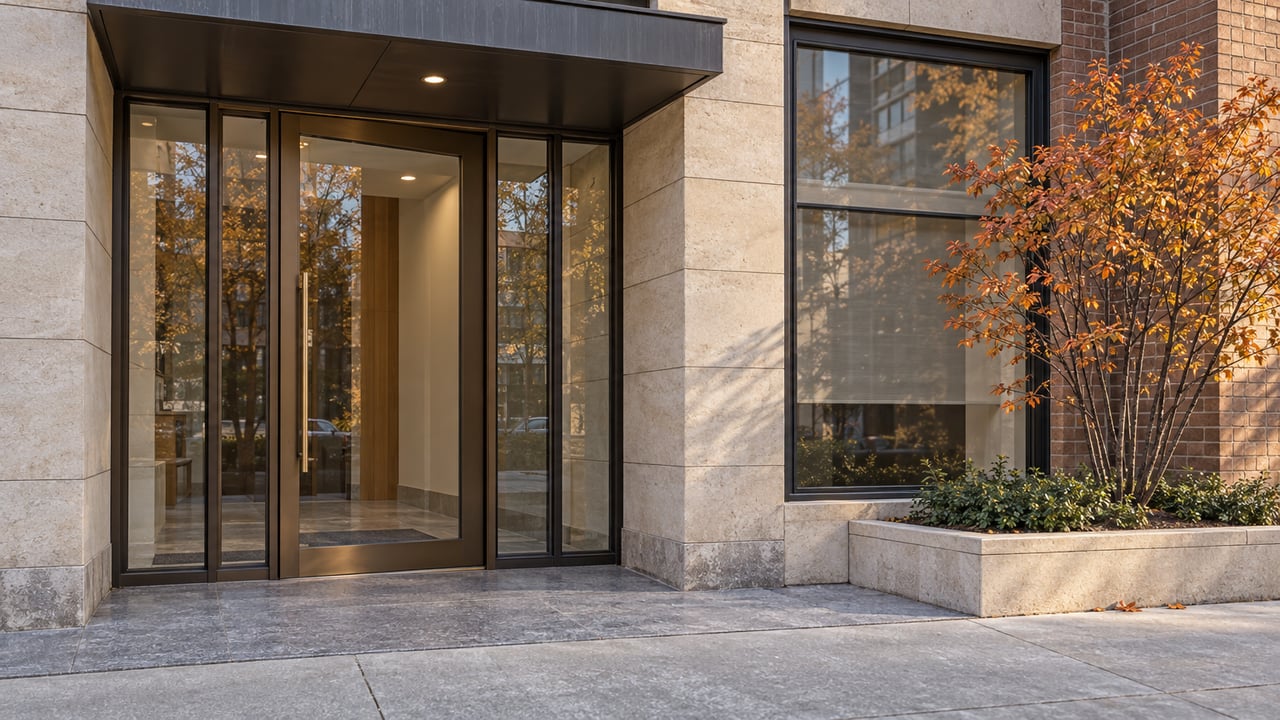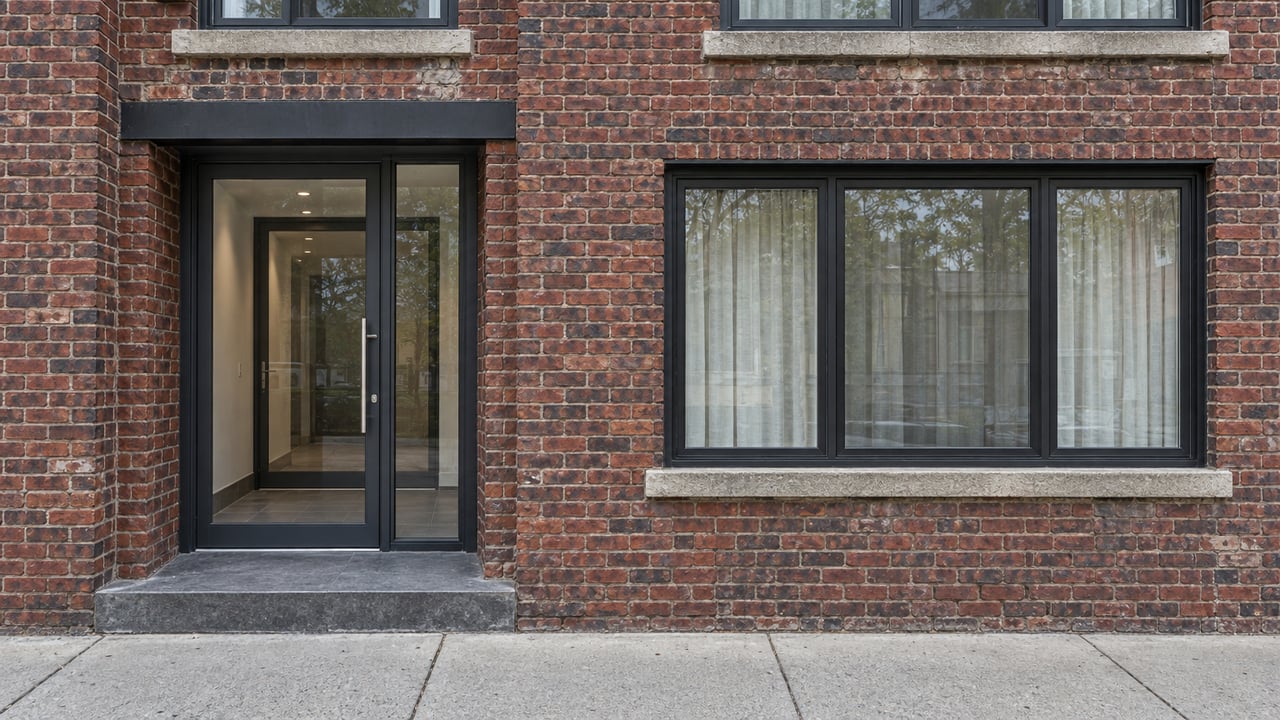
Two two-bedroom condos go under contract in New Eastside the same week. Both have lake views. Both list in the $700K to $900K range that's become typical for the neighborhood's larger units. Both close at a similar price per square foot. On paper, the buyers made the same decision.
They didn't. One bought into a tower that opened in the last fifteen years. The other bought into a building that's been standing since the Ford administration. That single fact, building age, will shape what each owner pays in HOA dues, whether they face a special assessment, and how easily they can resell, far more than the number on the settlement statement ever will.
This is the part the listing sheet doesn't show you, and it's worth understanding before you write an offer in this neighborhood.
Two developments, two decades apart, one zip code
New Eastside isn't one building stock. It's two, built roughly thirty years apart under two separate master plans.
The older cohort sits under what was originally approved as the Illinois Center planned development back in 1969, and built out through the 1970s, 80s, and into the 90s. Harbor Point, Park Millennium, The ParkShore, The Buckingham, and 400 East Randolph all belong to this generation. These buildings have had four or five decades to accumulate wear on the systems that are expensive to replace: elevators, roofs, facades, mechanical plants.
The newer cohort belongs to Lakeshore East, a 28-acre master-planned development that broke ground in 2002 on former rail yard and golf course land and is still adding towers today. Aqua, completed in 2010, and St. Regis Chicago, completed in 2020 and originally marketed as Vista Tower, both carry Jeanne Gang's design signature. The Regatta, The Chandler, 340 on the Park, Cirrus, and The Lancaster round out this group. These buildings haven't yet hit the age where major building-wide systems start failing on schedule.
A buyer comparing a unit in Harbor Point to a unit in The Chandler at the same price per square foot is not comparing like to like. They're comparing a building entering its second or third major capital cycle to one that hasn't hit its first.
Why age matters more than the fee on the listing sheet
Here's the mechanism that makes this worth caring about: Illinois does not require condo associations to commission a reserve study. State law tells boards to budget "reasonable reserves for capital expenditures and deferred maintenance," language written into Section 9 of the Illinois Condominium Property Act, but it stops short of mandating a professional study, a funding target, or a set update schedule. A board can be years behind on funding elevator or facade work and still be technically compliant with the statute.
What the law does require, under Section 22.1 of the Condominium Property Act, is that a seller hand over a specific disclosure package before closing: the declaration and bylaws, a statement of unpaid assessments, a statement of any capital expenditures anticipated in the current or next two fiscal years, and a statement of the reserve fund's status. That packet is where the real difference between an Illinois Center building and a Lakeshore East tower usually surfaces, not in the monthly assessment figure quoted during a showing.
There is a bill in Springfield that would close this gap. According to LegiScan, House Bill 2563 would require condo and HOA associations to obtain a reserve study and update it every five years, with an exemption for associations of 15 units or fewer. As of this writing, Community Solume reports that it remains in committee and has not been enacted, so buyers and sellers should plan around today's disclosure rules, not around what a future law might require.
What the age gap actually costs
The reason building vintage matters isn't abstract. Certain capital items follow a predictable clock, and that clock has already started on the Illinois Center generation.
Elevator modernization is one of the most expensive line items a high-rise board will ever approve, and it typically comes due every 25 to 30 years. A building completed in the 1970s or 80s is now due, or overdue, for that project. A tower completed in 2010 or 2020 is not. The same logic applies to roofs, facade repair, and the boiler and cooling systems that circulate through the older buildings' mechanical rooms. Lakefront exposure adds another layer: buildings closest to the water face more wind-driven rain and corrosion, which shows up as balcony, railing, and exterior envelope work.
When a board can't cover one of these projects out of reserves, the shortfall becomes a special assessment, billed directly to owners on top of the monthly fee. Across Chicago high-rises, these assessments commonly run from a few thousand dollars to $50,000 or more per unit, depending on the scope of the project and how the cost is divided across the building. A buyer who skips the disclosure packet on an older building isn't just risking a surprise bill. They're risking one sized to a 50-year-old elevator bank rather than a 2019 punch list.
Here's how the two cohorts stack up on the factors that actually drive that risk:
| Illinois Center era (1970s-1990s) | Lakeshore East era (2003-present) | |
|---|---|---|
| Example buildings | Harbor Point, Park Millennium, The ParkShore, The Buckingham, 400 E. Randolph | Aqua, St. Regis Chicago, The Regatta, The Chandler, 340 on the Park, Cirrus, The Lancaster |
| Major systems age | Elevators, roofs, and facades often at or past typical 25-30 year replacement cycles | Most major systems still within original warranty or first replacement window |
| Reserve study likelihood | Varies board to board; no state mandate either way | Varies board to board; no state mandate either way |
| Typical assessment exposure | Higher probability of a near-term capital project surfacing in the 22.1 disclosure | Lower near-term probability, though not zero on 2010-era buildings approaching their first major cycle |
The reserve study row reads the same for both because it is: no Illinois building is required to have one, regardless of age. That's precisely why a buyer can't infer building health from vintage alone. Age raises the odds that a capital project is coming due. It doesn't tell you whether the board has funded for it.
What to actually ask for before you write the offer
None of this shows up in a listing photo or a walkthrough. It shows up in paperwork, and the paperwork is available before you're under contract if you ask for it.
- The Section 22.1 disclosure statement, which covers unpaid assessments, anticipated capital expenditures for the current and next two fiscal years, and the reserve fund's status
- The last 12 months of board meeting minutes, which often flag a capital project months before it becomes a formal assessment vote
- The building's special assessment history for the past 5 to 10 years
- Whether the building carries FHA approval
A seller in an Illinois Center building with a clean assessment history and thorough minutes is offering real reassurance, not just a lower list price. A seller in a Lakeshore East tower with an unremarkable disclosure packet isn't automatically safer, they're simply earlier in the same cycle every high-rise eventually enters.
FAQ
Does a newer New Eastside building mean no special assessment risk? No. It means the major building-wide systems haven't reached their typical replacement age yet. A newer tower can still levy an assessment for an insurance deductible, a construction defect, or an unbudgeted operating shortfall.
If Illinois doesn't require reserve studies, how do I know if a board has one? Ask directly, and request the actual document, not just a summary. The Section 22.1 disclosure will state whether reserves are funded according to a study, but it won't hand you the study itself unless you ask.
Should I wait to buy until HB2563 passes? There's no way to predict a bill's timeline while it sits in committee. The more reliable approach is to request the disclosure documents the law already requires today and read them building by building, regardless of what happens in Springfield.
Building age is one input, not a verdict. The way to know what you're actually buying in New Eastside is to read the documents a specific building is required to hand over, not to rely on the year it was built or the number on the listing sheet. If you're comparing units across Harbor Point, Aqua, The ParkShore, or any of New Eastside's other towers and want help reading what the reserve fund and assessment history actually say about a building's near-term costs, Your Home Flight can walk through the disclosure packet with you before you write an offer. Request a consultation and bring the building name, we'll tell you what questions to ask next.
This article is general information, not legal, tax or financial advice. Consult a qualified professional about your situation.